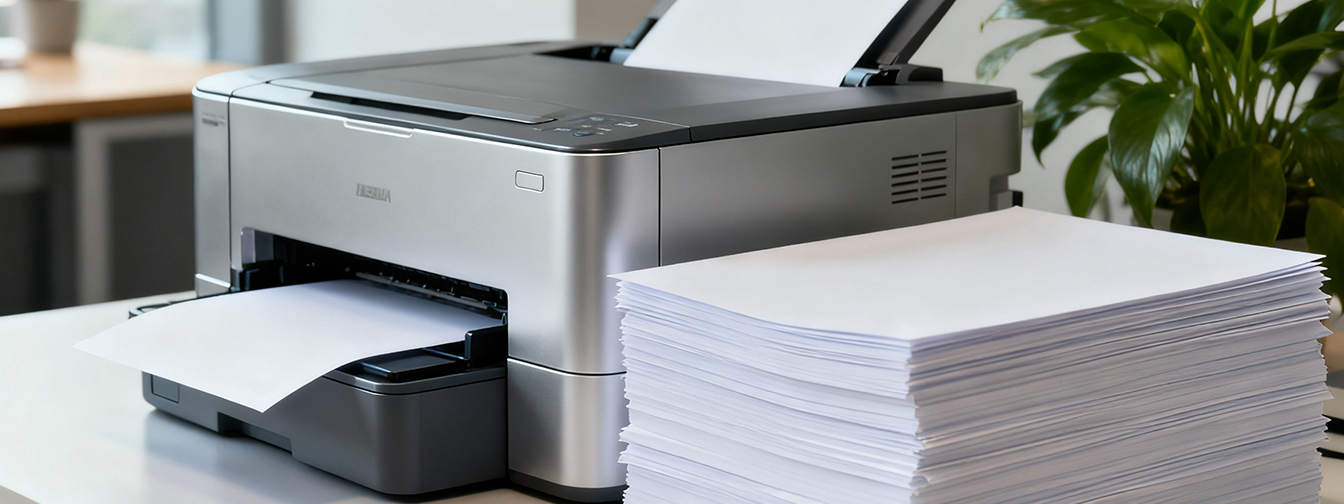
A4 self-adhesive labels are widely used labeling materials designed for convenient printing, product identification, packaging, and office organization. With a standard A4 sheet size of 210 × 297 mm, these labels are compatible with many common laser and inkjet printers, making them a practical solution for businesses, retailers, warehouses, and everyday office environments.
As businesses continue to seek flexible and cost-effective labeling solutions, A4 self-adhesive labels remain a popular choice for producing customized labels in small and medium quantities.
A4 self-adhesive labels are pressure-sensitive labels supplied on A4-sized backing sheets. Each sheet can contain multiple individual labels in different shapes and sizes, depending on the intended application.
Unlike traditional labels that require separate glue or additional adhesives, self-adhesive labels feature a pre-applied adhesive layer. Users simply peel the label from its backing paper and apply it to a suitable surface.
A typical A4 self-adhesive label consists of three main layers:
Facestock: The printable top layer, commonly made from paper or synthetic materials.
Adhesive Layer: The bonding layer that allows the label to stick to different surfaces.
Release Liner: The backing paper that protects the adhesive before application.
These layers work together to provide convenient handling, reliable adhesion, and clear printing performance.
The standard 210 × 297 mm sheet format makes A4 self-adhesive labels suitable for many commonly used office printers. Businesses can print product information, barcodes, shipping details, and identification labels without investing in specialized printing equipment.
A4 label sheets are available in various configurations, including full-sheet labels, rectangular labels, square labels, and smaller individual labels.
Different layouts allow businesses to select suitable label dimensions according to their packaging, product identification, and organizational requirements.
The pre-applied adhesive makes these labels easy to use. Users can print, peel, and apply them directly to suitable surfaces, reducing the need for additional adhesive materials or complicated application procedures.
Depending on the application, A4 self-adhesive labels can be produced using different facestock materials, adhesive strengths, and release liners.
Paper labels are commonly selected for general-purpose applications, while synthetic materials may be more suitable for environments requiring additional resistance to moisture, abrasion, or handling.
A4 self-adhesive labels serve a wide range of industries and business operations.
Product Packaging: Used for product names, specifications, ingredients, batch numbers, and branding information.
Shipping and Logistics: Suitable for printing shipping addresses, tracking information, barcodes, and warehouse identification details.
Retail and E-commerce: Used for price tags, SKU identification, inventory management, and product classification.
Office Administration: Helpful for organizing files, folders, documents, storage boxes, and office supplies.
Manufacturing and Warehousing: Applied to cartons, components, containers, and inventory items to improve product identification and tracking.
Selecting suitable A4 self-adhesive labels requires consideration of several factors.
Printer Compatibility: Check whether the label material is suitable for laser or inkjet printing. Not all label sheets support both printing technologies.
Label Size: Choose a layout that matches the available printing space and the dimensions of the product or packaging.
Adhesive Performance: Consider whether permanent, removable, or other specialized adhesive properties are required.
Facestock Material: Select paper or synthetic materials according to the intended application and environmental conditions.
Application Surface: Test adhesion on the actual surface, especially when applying labels to curved, textured, dusty, or low-energy materials.
Choosing the right combination of material, adhesive, and label dimensions can help improve labeling efficiency and reduce application problems.
Despite the development of automated labeling systems and specialized thermal printing solutions, A4 self-adhesive labels continue to offer practical advantages for many businesses.
Their standard sheet format supports convenient digital printing, while customizable layouts allow users to produce different label designs without ordering large quantities of pre-printed labels.
For small businesses, e-commerce sellers, distributors, and manufacturers, this flexibility can help simplify daily labeling tasks and support changing packaging or identification requirements.
A4 self-adhesive labels provide a versatile and convenient solution for product labeling, packaging, shipping, inventory management, and office organization. Their standard sheet format, customizable layouts, and easy application make them suitable for a wide range of business needs.
When selecting A4 self-adhesive labels, businesses should pay attention to printer compatibility, facestock materials, adhesive properties, and application requirements to achieve the best results.